When bulk tea travels on solid-wood pallets or with raw-wood dunnage, the buyer should treat the wood as a separate import-control item. Identify every wood component, check the current destination and transit rules, specify ISPM 15-compliant material where required, obtain it from an authorised source, inspect the official mark and physical condition before loading, and prewrite an arrival hold procedure. A marked pallet does not prove that the tea, food-contact pack, load strength or container is acceptable.
This checklist is deliberately narrower than the site's food-contact packaging specification, distribution-test plan and container-loading guide. It controls the phytosanitary status and evidence for pallets, crates, braces, blocks and loose dunnage that accompany the tea.
Build one wood-packaging control record
| Control field | Buyer should define | Evidence to retain | Stop or hold trigger |
|---|---|---|---|
| Shipment scope | Origin, destination, transit points, mode and importing party | Dated route and rule review | Final route or responsible importer is unknown |
| Wood inventory | Pallets, crates, collars, skids, wedges, blocks and dunnage by material | Pack drawing and component list | Unlisted raw wood appears at loading |
| Regulatory status | Which items are regulated, exempt or subject to a special national measure | Official destination source and check date | Scope decided from supplier habit alone |
| Approved source | Authorised producer or treatment/marking provider and purchasing route | Supplier identity, order and treatment evidence | Mark applied by an unknown or unauthorised party |
| Treatment and mark | Accepted treatment code, country/provider codes, position, legibility and durability | Specification and clear photographs | Missing, unreadable, copied, altered or conflicting mark |
| Physical condition | No live pests or signs, unacceptable bark, soil, decay, odour, wetness or unsafe damage | Dated receiving and loading checks | Pest evidence, contamination or damaged load support |
| Load interface | Dimensions, capacity, tea-pack protection, stretch wrap and securing method | Approved pallet/load pattern | Compliance mark is used instead of structural approval |
| Shipment evidence | Unit count, mark visibility, exceptions, substitutions and responsible sign-off | Pre-load photos and release record | Evidence cannot be linked to the actual shipment |
| Arrival response | Inspection owner, segregation, authority/broker notice and disposition route | Arrival record and final decision | Wood removed or goods released before evidence is preserved |
Run a nine-step ISPM 15 buyer workflow
1. Inventory every wood component
Ask whether the shipment uses solid-wood pallets, crates, pallet collars, skids, braces, wedges, blocks or loose dunnage. Do not look only at the item that carries the cartons. The IPPC standard includes raw-wood dunnage even when it does not remain permanently attached to the commodity. Record who supplies each component and whether repairs or last-minute bracing are allowed.
2. Check the route-specific legal rule
ISPM 15 is an international phytosanitary standard adopted under the International Plant Protection Convention; it is not, on its own, identical to every country's import law. The EU Plant Health Law requires non-EU wood packaging and dunnage within scope to be treated, marked and debarked. U.S. APHIS says wood packaging entering or transiting the United States must meet its ISPM 15 requirements. Check the competent authority for the actual destination and any transit country on the booking date.
3. Separate regulated raw wood from exempt materials
The current IPPC text covers packaging made from raw wood but exempts several low-risk items, including wood 6 mm or less and packaging made wholly from processed material such as plywood, particle board, oriented strand board or veneer produced using glue, heat or pressure. Do not declare a whole pallet exempt because it contains one plywood deck: list each component. Paper, plastic or metal systems avoid the ISPM 15 wood-treatment question, but they still need structural, hygiene, food-protection and destination acceptance checks.
4. Source through an authorised marking system
Treatment and application of the official mark must operate under the exporting country's national plant protection organisation. For China-origin wood packaging, current Customs guidance says only enterprises authorised by Customs may produce and apply the IPPC mark for outbound wood packaging; users can buy from published authorised marking enterprises and request the treatment-conformity evidence. Never ask a tea packer, freight forwarder or print shop to reproduce a mark simply because a customer requested “IPPC pallets.”
5. Approve the treatment and mark specification
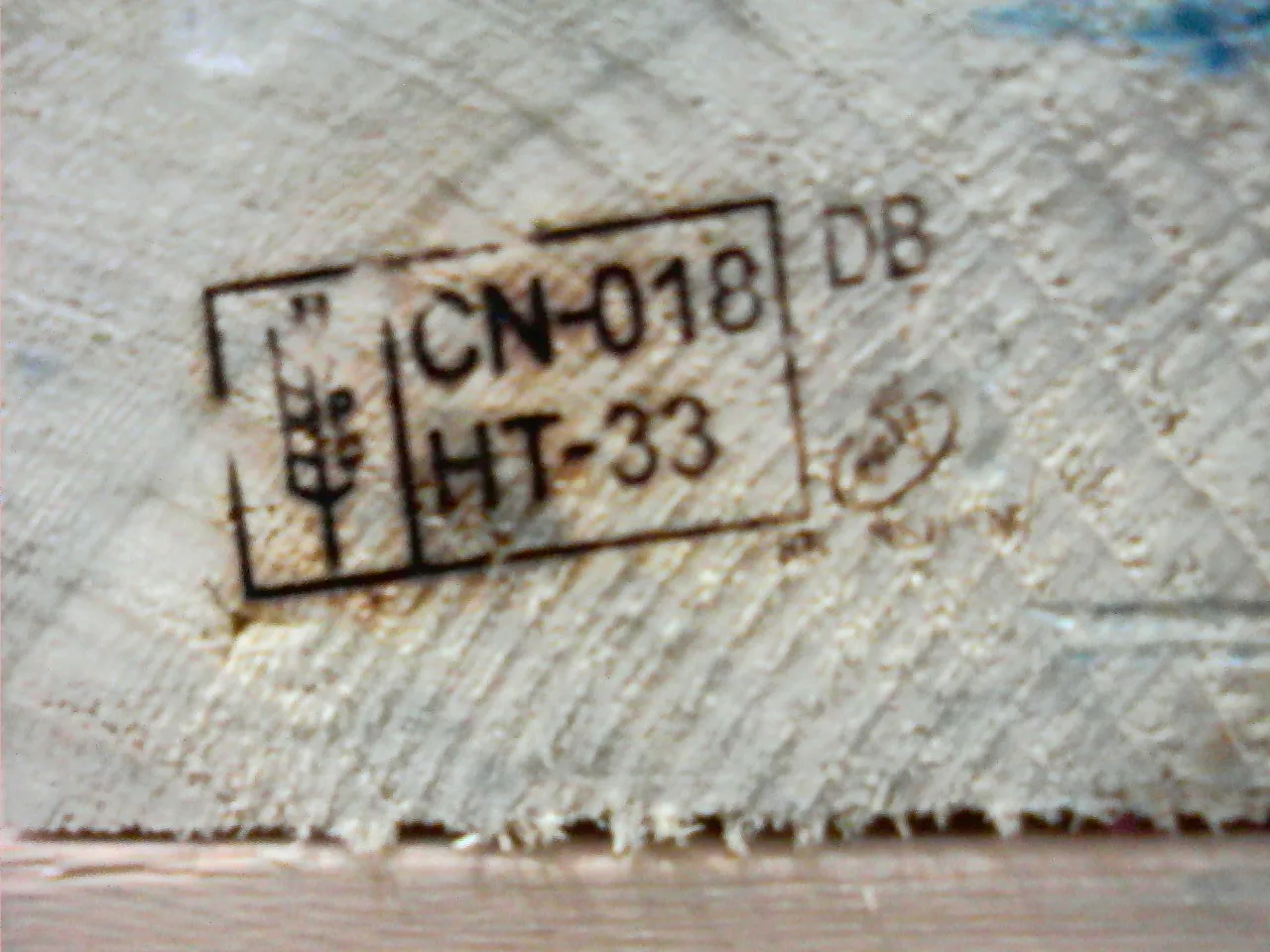
ISPM 15's mark combines the protected IPPC symbol with a country code, a producer or treatment-provider code and the treatment code. The standard requires the mark to be legible, durable, non-transferable and visible when the packaging is in use, preferably on at least two opposite sides. Specify which treatment codes the destination accepts and which evidence the buyer wants, but do not treat the mark as a fumigation certificate, chemical-residue report, food-contact declaration or guarantee of ongoing pest freedom.
6. Inspect the actual units before loading
Match the delivered pallet or dunnage type to the approved component list. Check each unit's mark, country/provider/treatment codes, visibility and obvious alteration. Examine wood for live insects, galleries, frass, suspicious holes, unacceptable bark, soil, mould, strong odour, oil, chemical staining, wetness, decay, protruding nails and broken members. A valid-looking mark does not excuse signs of pests or an unsafe, contaminated pallet. Photograph exceptions before anything is repaired, replaced or discarded.
7. Keep phytosanitary and load-safety decisions separate
ISPM 15 reduces the risk of quarantine pests associated with raw wood; the standard expressly says its measures are not ongoing protection from contaminating pests or other organisms. It does not approve pallet dimensions, load capacity, fork entry, stacking height, stretch-wrap pattern or the tea package. Confirm those items through the packaging-performance and loading plan, and apply the container-condensation controls so wet timber is not introduced into a dry-loading system.
8. Freeze evidence against the shipment
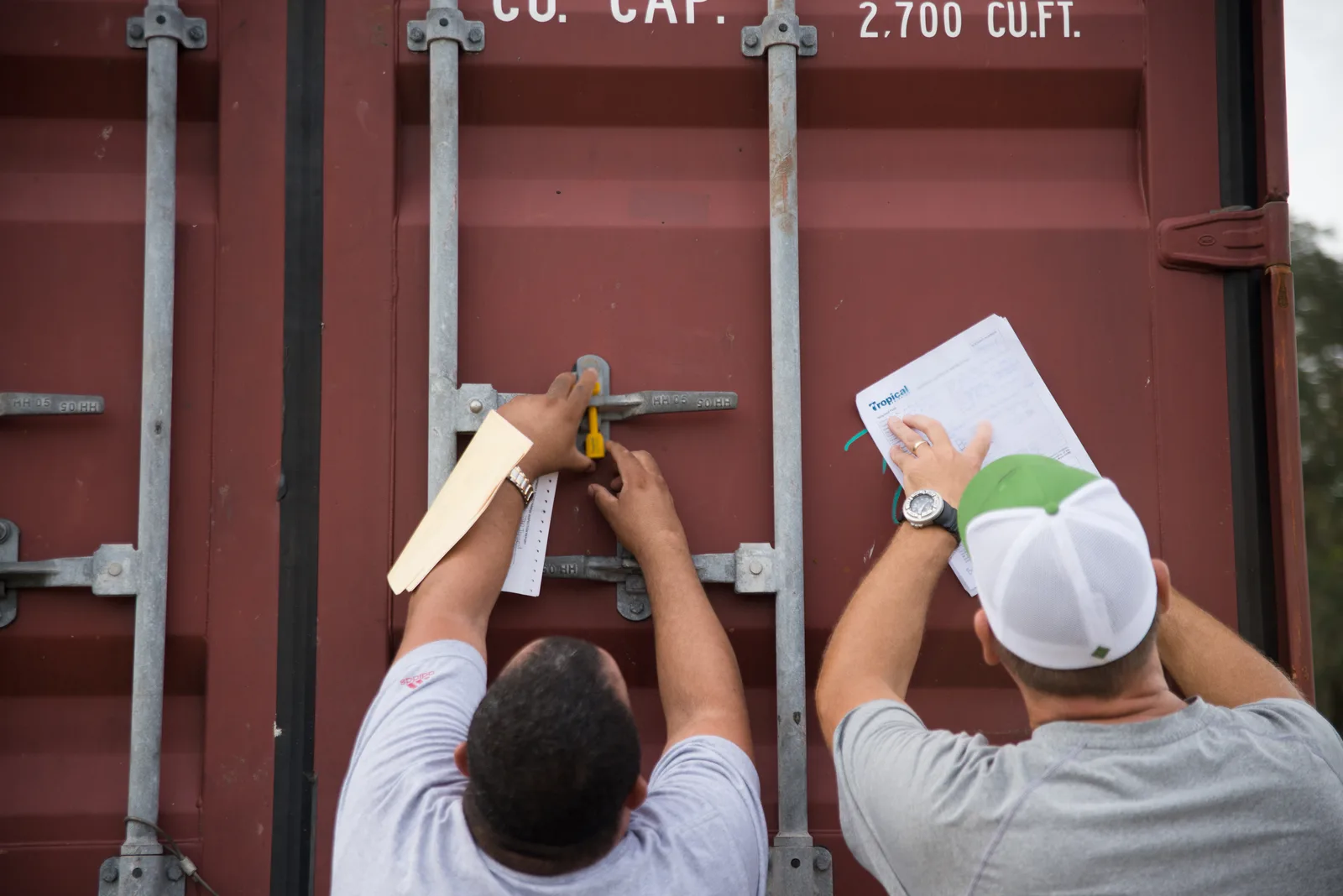
Before the container is closed, record the shipment, container, wood-packaging count and supplier, plus representative full-unit and readable-mark photographs. Note every substitution, repaired unit and piece of added dunnage. Keep the order/specification, provider evidence, receiving check and loading release together. The IPPC mark is designed to replace a phytosanitary certificate for compliant wood packaging under the standard; a buyer may still contract for supporting evidence, and destination authorities may inspect the wood.
9. Hold and escalate nonconformity at arrival
If a mark is missing, unreadable or inconsistent, or if pests or suspicious damage are found, stop routine disposal and uncontrolled unloading. Segregate the affected scope, preserve photographs and wood identity, and contact the importer, broker and competent plant-health authority as the destination procedure requires. Do not burn, treat, return or remove questioned wood without authority where official control applies. Decide the tea separately through the arrival quarantine-and-release workflow.
Keep five requirement types separate
- Legal requirement: destination and transit plant-health law controls the shipment in its jurisdiction, including inspections and actions for noncompliance.
- Voluntary standard: ISPM 15 provides the internationally agreed treatment, marking, repair and import-response model. National implementation gives it legal effect.
- Trade reference: “heat-treated pallet,” a photo or a provider statement may help identification but does not replace a compliant official mark or the applicable authority rule.
- Buyer specification: defines allowed materials, source, treatment code, mark inspection, condition, photographs, substitution control and hold triggers.
- Contract requirement: allocates procurement, checking, notification, delay cost and remedies between buyer, seller and logistics parties without limiting an authority's powers.
Common buyer mistakes
- Checking the tea's phytosanitary or health documents but ignoring its pallets and dunnage.
- Assuming every destination applies ISPM 15 in exactly the same way.
- Calling plywood or plastic “ISPM 15 certified” instead of documenting why it is outside the raw-wood scope.
- Accepting a loose stamp image that cannot be linked to the actual pallet or shipment.
- Allowing untreated blocks or braces to be added after the marked pallets were approved.
- Confusing a treatment mark with proof that the pallet is clean, dry, odour-free or strong enough.
- Using a damaged or altered marked pallet without controlled repair and reapproval.
- Photographing one mark while other units are unmarked or inaccessible for inspection.
- Removing questioned wood before the broker or plant-health authority can advise.
Practical conclusion
Use the sequence map wood - check route - classify scope - approve source - specify mark - inspect units - verify load safety - freeze evidence - control arrival. The result should be a shipment-linked record showing why every pallet, brace and piece of dunnage is acceptable, rather than a generic promise that the container uses “export pallets.”
Align the record with Yunjing Tea's bulk packing and container plan and sample-to-shipment quality controls. Then send the destination, route, pallet preference and bulk pack format for a specification-based discussion.
Sources checked 15 October 2026: the IPPC's current adopted-standards catalogue and official ISPM 15 text; China's current outbound-wood-packaging guidance through the China (Fujian) International Trade Single Window, plus GACC Order 283, published 27 April 2026 but not effective until 1 November 2026; the European Commission's current wood-packaging and dunnage requirements; and U.S. APHIS's ISPM 15 import guidance, last modified 27 July 2026. Recheck the competent authority, transit route and contract before every shipment.