Treat a bulk tea container seal as a controlled identity and custody record, not as proof that the tea inside is compliant. The buyer should approve the seal type, control unused seals, record who issued and applied each unique number, verify it at every handoff, document every authorised replacement, and hold the load when the number, condition or replacement history cannot be reconciled.
A strong seal cannot correct the wrong tea, poor packing, biased sampling or an unsuitable container. It only supports evidence that the doors were secured and that visible access should leave a trace. Connect this checklist to the pre-shipment inspection plan, container-condensation controls and arrival release workflow.
Build one container-seal control record
| Control point | Buyer and shipper should define | Evidence to retain | Stop or hold trigger |
|---|---|---|---|
| Rule set | Destination law, Customs/AEO programme, carrier, insurance, customer and contract requirements | Dated rule review and named owner | Applicable rule or responsible party is unknown |
| Seal specification | Mechanical-seal type, ISO 17712 classification where required, marking and approved source | Specification, supplier evidence and receipt batch | Unapproved, unreadable, reused or unexplained seal |
| Inventory custody | Secure storage, authorised issuers, issue sequence and unused/voided reconciliation | Seal inventory and issue log | Missing numbers, duplicate IDs or uncontrolled access |
| Container and load | Container ID, booking, product lots, pack count, gross mass and loading completion | Packing list, loading record and photographs | Container or cargo differs from approved records |
| Application | Who closes, who witnesses, approved locking position and verification method | Time, place, names, seal number and clear photographs | Seal will not lock, spins loose or number is illegible |
| Handoffs | Which parties inspect, what they record and how exceptions are escalated | Gate, carrier, terminal and status records | Broken, missing, mismatched or visibly altered seal |
| Replacement | Who may remove/reseal, reason codes, witness, notification and document updates | Old and new numbers, authority, time and supporting record | New seal appears without a complete change history |
| Receipt and opening | Attendees, pre-opening checks, evidence order and safe opening authority | Arrival photos/video, inspection form and opening log | Doors opened before identity and condition are preserved |
| Disposition | Hold scope, carrier/authority notice, cargo inspection and release authority | Incident file and final decision | Goods moved, mixed or used before reconciliation |
Run a nine-step seal chain-of-custody workflow
1. Identify which requirement actually applies
Start with the exact origin, destination, transit route, mode, carrier, Customs programme, insurance terms and customer contract. ISO 17712 is a voluntary technical standard for classifying and testing mechanical freight-container seals; it is not, by itself, a universal law or a complete security programme. The WCO SAFE Framework addresses Customs and authorised-economic-operator supply-chain security.
2. Approve the seal before the shipment
State the accepted type and classification, unique marking format, supplier evidence, delivery route and rejection criteria. If “ISO 17712 high-security seal” is required, ask for evidence linked to the actual product rather than accepting a catalogue phrase or logo. Record who checks that evidence and whether the carrier, destination authority or customer requires a particular application location or additional device. A seal's classification does not prove the container contents, the loading count or the truth of the documents.
3. Control receipt, storage and issue
Receive seals as controlled numbered items. Reconcile the delivered range, record damaged or duplicate numbers, restrict storage access and issue only to named personnel against a container or loading job. Never leave open boxes of seals on a loading dock. Close each job by accounting for the applied, returned, damaged and voided seals; investigate gaps rather than carrying them forward as an unexplained balance.
4. Freeze the cargo identity before closing
Confirm the container number, size/type, booking, tea lots, package marks, count and packing list. Complete the cleanliness, dryness, odour, damage and door checks required by the bulk tea container-loading guide. Resolve shortages or substitutions before closure. A correct seal on the wrong container or an incompletely reconciled load creates a neat record of the wrong event.
5. Apply, verify and record the seal immediately
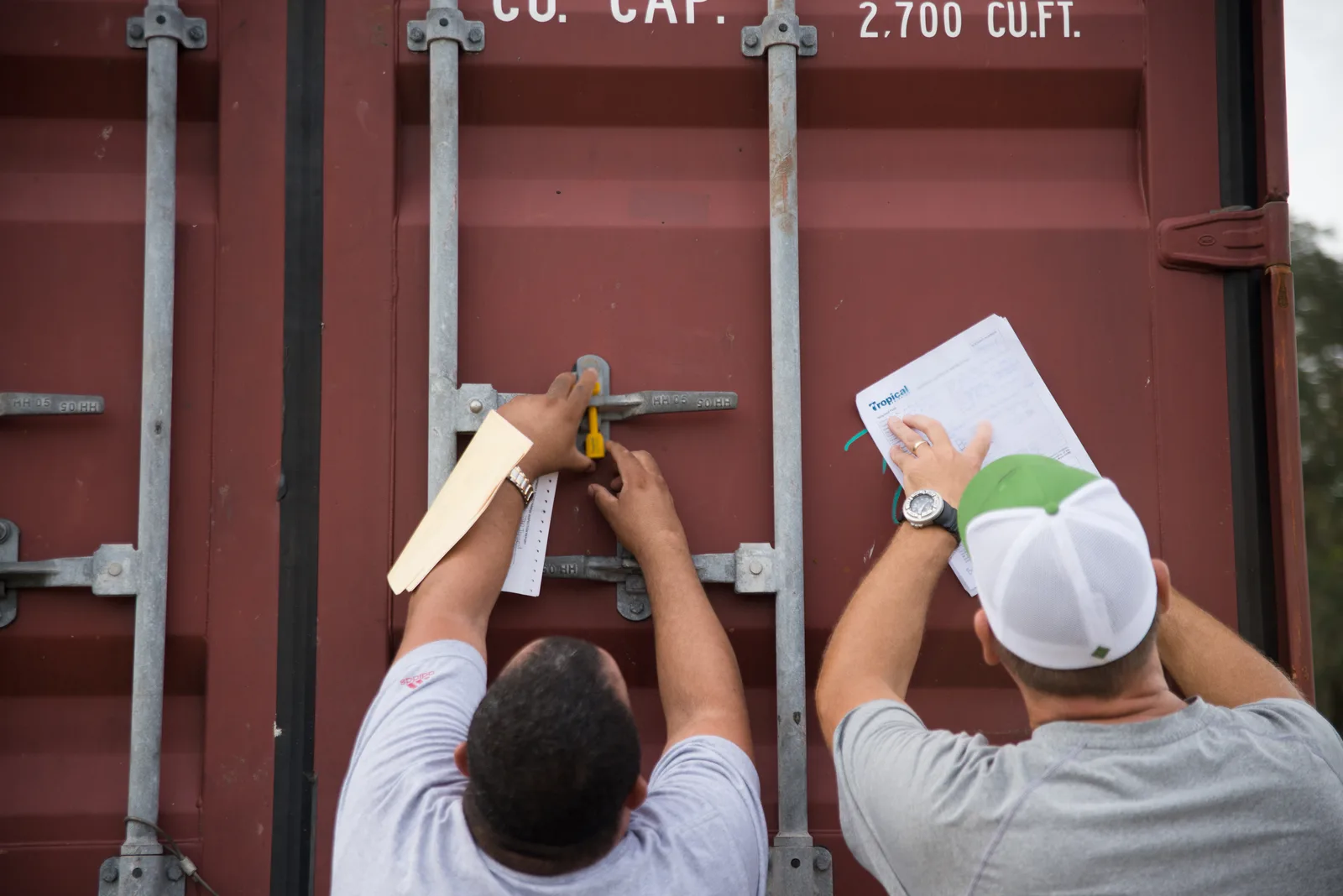
After loading is complete and the doors are closed, an authorised person applies the seal in the approved location. A second person verifies the full identifier against the issued seal and shipment record, visually checks for damage or assembly anomalies, and physically checks that it is engaged without using force that could damage it. Record the date, time, place, container ID, seal ID, people involved and exceptions. Photographs should show the container identity and readable seal in context; retain them in the controlled shipment file, not an unrestricted public channel.
6. Verify at custody handoffs
The WCO SAFE Framework's seal-integrity model records affixing, changes and verification at key points such as modal transfer. Define which handoffs the shipper, haulier, rail operator, terminal, carrier, broker and consignee can evidence. At each agreed checkpoint, compare the actual number with the current authorised record and inspect condition before accepting custody.
7. Prewrite the authorised replacement route
Legitimate inspections may require a seal to be removed. The replacement record should identify the authority or authorised party, reason, location, date/time, old number, new number, witnesses and documents updated. WCO SAFE expects replacement particulars to follow the cargo record. As a U.S. example, CBP's containerised-cargo sealing policy says officers reseal examined cargo with a uniquely numbered high-security bolt seal and notify appropriate parties of the new number. Do not treat every changed seal as theft, but never accept an unexplained change.
8. Preserve arrival evidence before opening
Position the container safely and record the container number, door/locking-bar condition, seal type, full identifier and visible tampering before cutting anything. Compare against the latest authorised record, including any Customs or carrier reseal notice. If the seal is missing, broken, mismatched or suspicious, stop routine opening, keep the goods segregated and notify the responsible carrier, broker, insurer, authority and seller as the route and contract require. Do not replace the questioned seal merely to make the paperwork match.
9. Decide the cargo separately from the seal incident
A seal discrepancy is a security and evidence event, not automatic proof that tea is unsafe or nonconforming. Define the affected scope, preserve video and photographs, reconcile movements and official inspections, inspect the container and packages, and decide whether sampling, testing or quantity checks are justified. Then issue one documented release, restricted-use, claim, rejection or other disposition. Use the quality-claim evidence checklist and keep the incident linked to the lot traceability record.
Keep five requirement types separate
- Legal requirement: Customs, port, transport and security law applies within its jurisdiction and route. The competent authority's inspection and resealing process controls when it acts.
- Voluntary standard: ISO 17712 classifies and tests mechanical seals; the WCO SAFE Framework and non-mandatory IMO/ILO/UNECE CTU Code provide recognised control models. They become private obligations only when adopted by a programme, rule or contract.
- Trade reference: a bill-of-lading seal field, carrier status, “high security” description or photograph helps reconciliation but is not a complete custody history.
- Buyer specification: defines approved seal, inventory control, application, evidence, handoff checks, replacement data and hold triggers.
- Contract requirement: allocates tasks, notification deadlines, access to records, incident cost and remedies between parties; it cannot override authority powers or applicable law.
Common buyer mistakes
- Treating an ISO 17712 reference as proof of cargo identity, food safety or uninterrupted custody.
- Buying numbered seals but failing to control who receives, stores and issues them.
- Typing a number from memory after the truck has departed.
- Taking a close-up that shows the seal but not the container identity or application context.
- Checking the number but ignoring cuts, adhesive, altered markings, loose hardware or door damage.
- Assuming the seal shown on the first document must remain after a lawful Customs inspection.
- Accepting a replacement number without the remover, authority, reason, time and old-number record.
- Opening first and photographing later.
- Rejecting sound cargo solely because a seal changed, or releasing cargo solely because the seal matched.
- Publishing detailed shipment security records to people who do not need access.
Practical conclusion
Use the sequence identify rule - approve seal - control inventory - reconcile load - apply and verify - check handoffs - document replacements - preserve arrival evidence - decide cargo. The useful result is a continuous, reviewable record that explains every seal number and every authorised change while keeping the final tea-release decision tied to cargo evidence.
Before booking, align the seal record with Yunjing Tea's bulk packing and container plan and sample-to-shipment quality controls. Then send the destination, route, carrier instructions, packing plan and required seal controls for a specification-based discussion.
Sources checked 14 October 2026: the current ISO catalogue record for ISO 17712:2013, Freight containers — Mechanical seals, published May 2013 and confirmed current in December 2023; the World Customs Organization's SAFE Framework of Standards, 2025 edition, including its seal-integrity and replacement-record model; the non-mandatory IMO/ILO/UNECE CTU Code, including completion and receipt checks; and U.S. CBP's current containerised-cargo sealing policy, used only as a U.S. inspection/resealing example. Recheck the current route, authority, carrier, insurance, customer and contract requirements for every shipment.