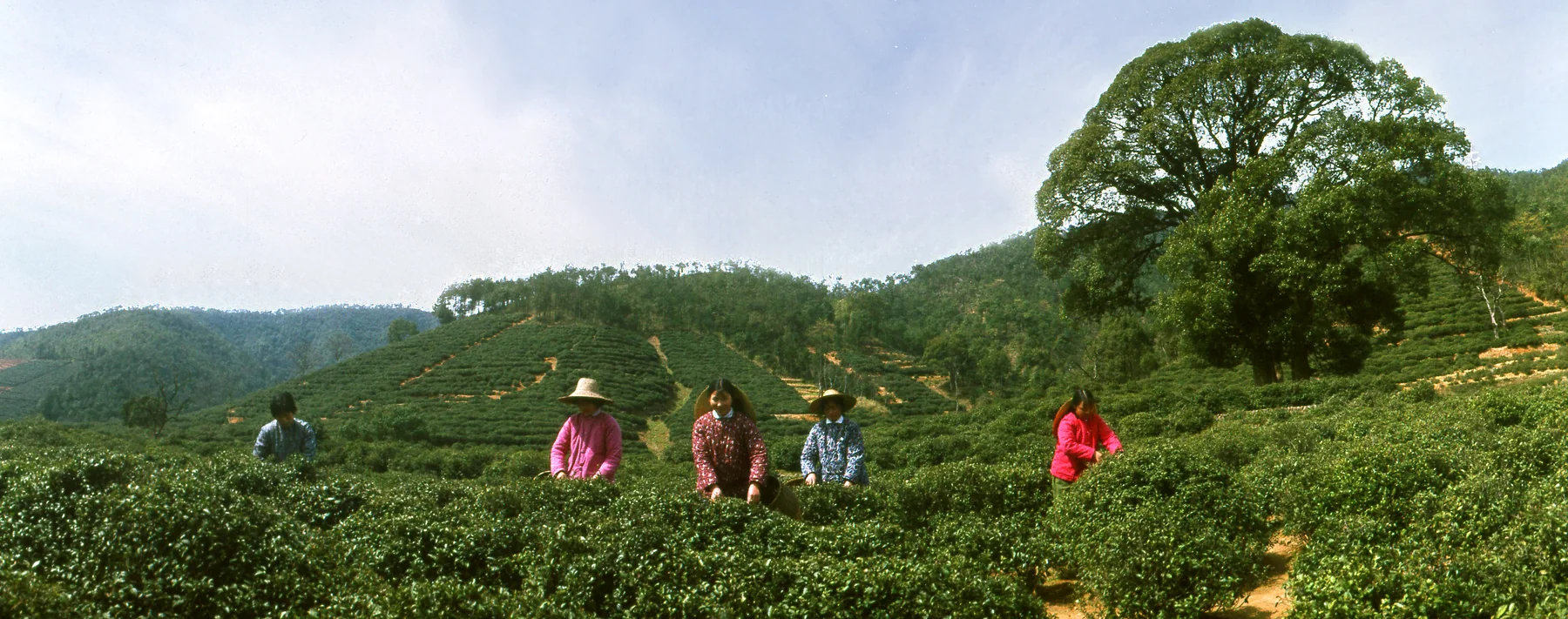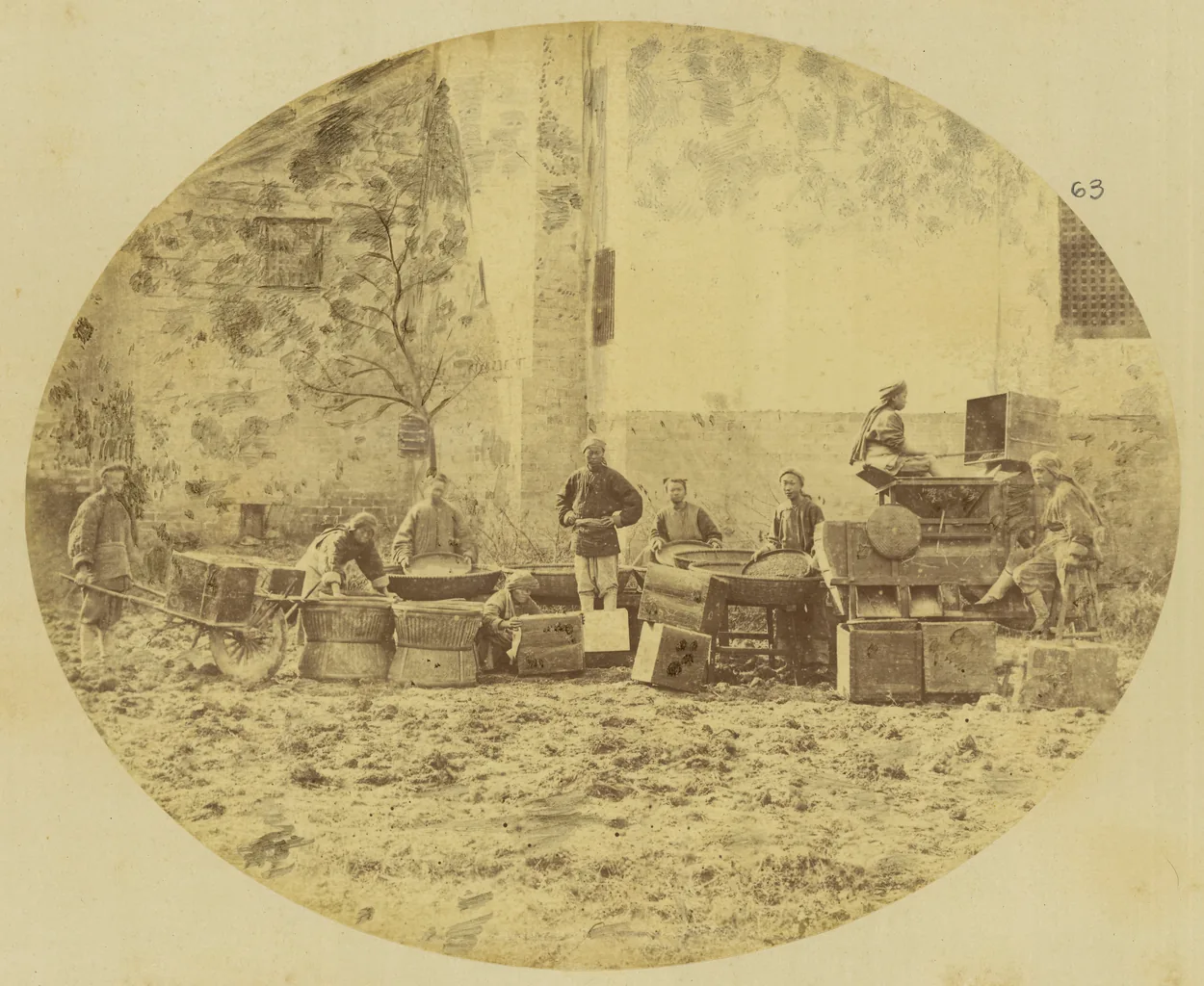
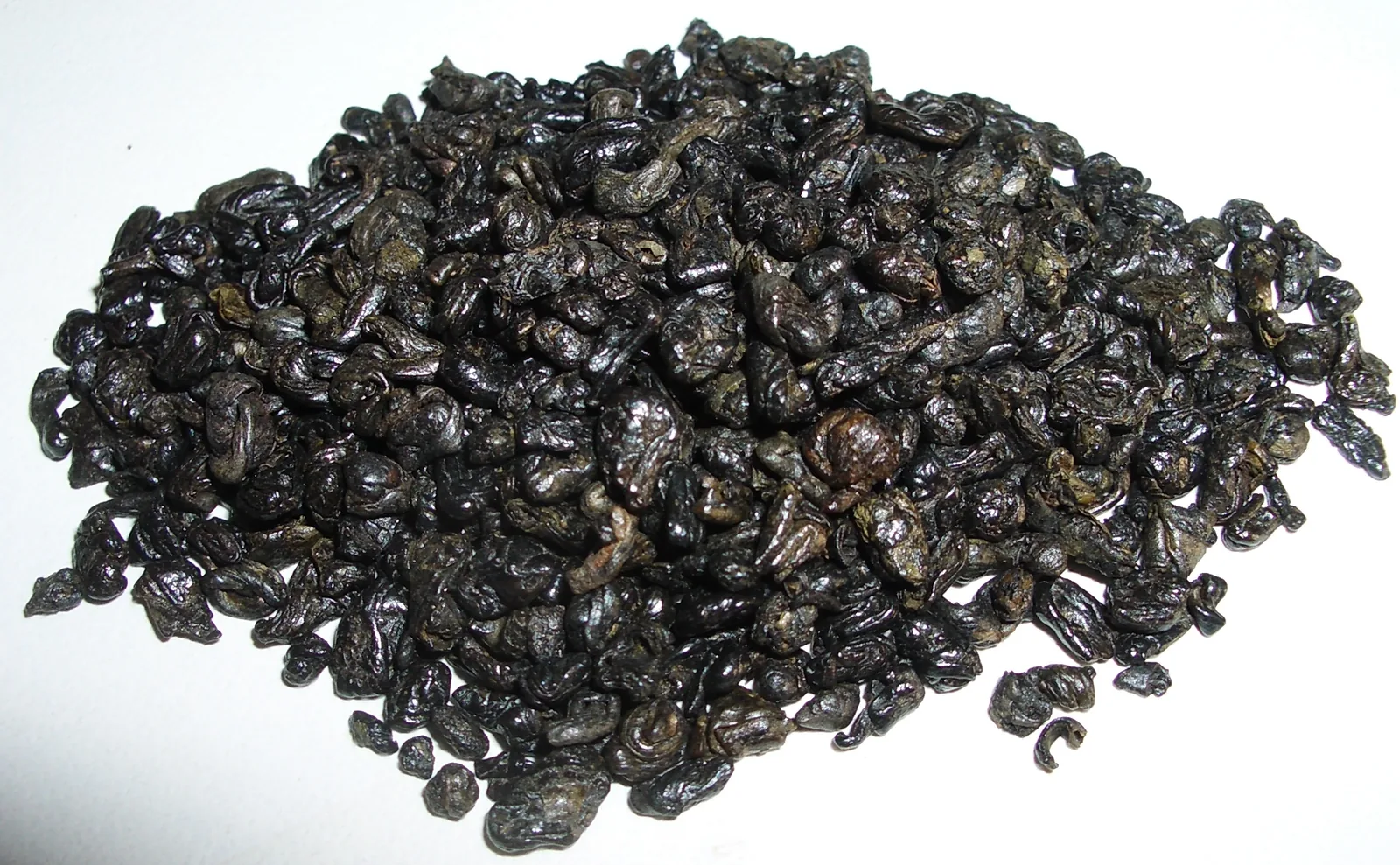
Use a Gunpowder grade code to build a sample shortlist, not to approve a purchase. Codes 3505, 9372, 9373, 9374 and 9375 identify the core commercial sequence buyers commonly encounter, while 9475 and 9575 are additional commercial references in Yunjing Tea's current range. None of these numbers, by itself, fixes pellet size, uniformity, stalk, powder, cup profile, analytical limits, destination compliance or shipment acceptance.
Start with the standard, but finish with a specification
Gunpowder tea, called zhucha or pearl tea, is a rolled green-tea style. Compactness makes dry-leaf appearance easy to notice, but a neat pellet is not a complete quality decision: the buyer still has to observe how the leaf opens, how the liquor performs under the market's brewing convention, and whether the represented lot meets every legal and contractual requirement.
China's official standards platform, checked on 8 August 2026, lists GB/T 14456.4-2016, Green tea - Part 4: Gunpowder tea, as a current recommended national standard. It was published on 14 June 2016 and took effect on 1 January 2017. The catalogue confirms the product standard's identity, scope and voluntary status; buyers who cite it must obtain the controlled text and state the edition rather than relying on a seller's label or this overview.
Keep five controls separate
- Trade reference: the code helps buyer and seller identify a familiar commercial lane. It is shorthand, not proof that two suppliers' teas are identical.
- Legal requirement: the destination's current rules for food safety, residues, contaminants, labelling and import control apply independently of the code.
- Voluntary standard: a GB/T or ISO document is a technical reference. It controls the deal only when law, a buyer specification or the parties' agreement incorporates it.
- Buyer specification: the buyer defines measurable dry-leaf, sensory, analytical, packing and documentation requirements for the intended use.
- Contract requirement: the signed agreement identifies the controlling sample and specification, inspection timing, decision rule, remedies and document precedence.
A buyer's map of the seven codes
The table maps Yunjing Tea's current product shortlist to practical starting lanes. It is not a universal ranking for every origin, supplier or destination. Use it to choose adjacent samples, then let the actual evidence decide.
Treat 9475 and 9575 especially carefully: they are useful commercial references in this catalogue, but the code must not substitute for a sealed sample and written definition. Even within the 3505-to-9375 sequence, a finer-looking tea is not automatically the better purchase when the market needs a forceful brew, a particular blend contribution or a fixed packed-product cost.
Use this seven-step selection method
- Write the end use first. State loose wholesale, consumer repacking, mint-tea service, house blend or further processing. Record the destination, brewing convention, target cost structure and the attributes customers notice.
- Request adjacent samples. Start with one likely code and the closest commercial options on either side. This makes the cost-versus-performance trade-off visible and reduces the risk of accepting the first plausible offer.
- Blind the identities. Give each candidate a random code and hold tea mass, water, temperature, infusion time, vessel and serving order constant. The site's consistent tea cupping method explains a repeatable comparison and stop conditions.
- Measure the dry leaf. Define an agreed sieve or particle-distribution method, pellet-shape reference, maximum stalk and powder limits, foreign-matter rule and colour tolerance. A retained sample can anchor appearance, but photographs alone are vulnerable to lighting and scale differences.
- Record opening and cup performance. At fixed times, observe whether pellets open evenly and whether hard pieces remain. Score aroma, liquor colour and clarity, briskness, body, bitterness, astringency, aftertaste and critical off-notes against written anchors. Do not reward appearance twice by letting it influence blind cup scores.
- Qualify composition and safety separately. ISO's catalogue says ISO 11287:2011 covers the definition, basic chemical requirements, packing and marking of green tea and remains current after confirmation in 2021. Apply the full agreed standard and current destination law; a grade code or sensory pass is not legal-compliance evidence.
- Lock the lot and release rule. Link the approved sample to a defined production lot, representative sample, laboratory evidence, pre-shipment comparison, pack marks and remedy. ISO 1839:1980 applies to sampling tea from containers of all sizes and covers sample packing, labelling, dispatch and the sampling report.
Copy this code-to-contract specification
For sensory preparation, ISO's catalogue lists ISO 3103:2019 as current after confirmation in 2025 and says it specifies preparation of tea liquor for sensory tests. If the contract requires ISO preparation, obtain the full document and cite the edition. A house method is also usable when fully written, consistently followed and never mislabelled as ISO.
Common buyer mistakes
- Reading the numbers as a universal price or quality ladder.
- Assuming every supplier defines 9475 or 9575 in exactly the same way.
- Requesting one sample instead of an adjacent-code comparison set.
- Judging pellet appearance without measuring powder, stalk and particle spread.
- Letting attractive dry leaf bias the blind cup result.
- Using one convenient sales sample to release a later, undefined lot.
- Allowing the code to replace current destination-law and laboratory checks.
- Specifying a result limit without its method, unit, basis or conformity rule.
- Comparing price per kilogram without pack yield, freight and end-use performance.
- Treating a voluntary standard, buyer specification and signed contract as interchangeable.
Practical conclusion
The defensible path is end use - adjacent codes - blind samples - measured pellets - controlled cup - legal and analytical review - representative lot release. Select the tea whose actual lot fits the buyer's market and written specification at the agreed commercial terms, not the code that looks best in an RFQ.
Start with the complete Gunpowder green tea range, use the bulk green tea purchase-specification template, review Yunjing Tea's sample-to-shipment quality controls and bulk packing options, then send the destination, end use, target sample and volume when requesting an adjacent-code set.
Sources checked 8 August 2026: SAMR national standards platform, GB/T 14456.4-2016, Green tea - Part 4: Gunpowder tea (current recommended national standard); ISO 11287:2011, Green tea - Definition and basic requirements (confirmed 2021); ISO 3103:2019, Tea - Preparation of liquor for use in sensory tests (confirmed 2025); and ISO 1839:1980, Tea - Sampling (current published standard).