Buy green tea for extraction by linking the raw-leaf specification to your actual extraction process: define each assay method and reporting basis, control particle form and contaminants, then approve the material through a pilot extraction and mass balance. A high water-extract or total-polyphenol result can help compare lots, but neither number alone predicts factory yield, catechin recovery, filtration behaviour or finished-extract compliance.
Start with the output, not a generic tea grade
Write down whether the plant will make a water extract, hydroalcoholic extract, beverage concentrate, spray-dried powder or another defined intermediate. Fix the target solids, named compounds, caffeine position, colour, flavour, solubility and downstream legal category. Then work backwards to the raw tea. Whole-leaf appearance may matter little to an extractor, while dry-matter cost, particle distribution, clean flavour, filtration load and recoverable target compounds may drive the economics.
Keep five requirement layers separate:
- Legal requirement: food, contaminant, residue, solvent, additive and labelling rules apply according to the raw material, process, finished product and destination.
- Voluntary standard: an ISO test method gives parties a common analytical procedure; it does not set your process yield or automatically become law.
- Trade reference: words such as fannings, broken green tea or extraction grade describe a commercial form, not a guaranteed chemical profile.
- Buyer specification: the processor defines the raw-material limits, methods, particle profile, process trial and release evidence needed for its equipment.
- Contract requirement: the signed agreement identifies the controlling sample, edition of each method, result basis, lot definition, change notice and remedy.
Build a raw-material control sheet
| Control field | What to specify | Decision use |
|---|---|---|
| Identity and form | Camellia sinensis green tea; permitted leaf, broken tea or fanning form; exclusions for flavours and undeclared additions | Prevents a low-cost substitution from being hidden behind “extraction grade” |
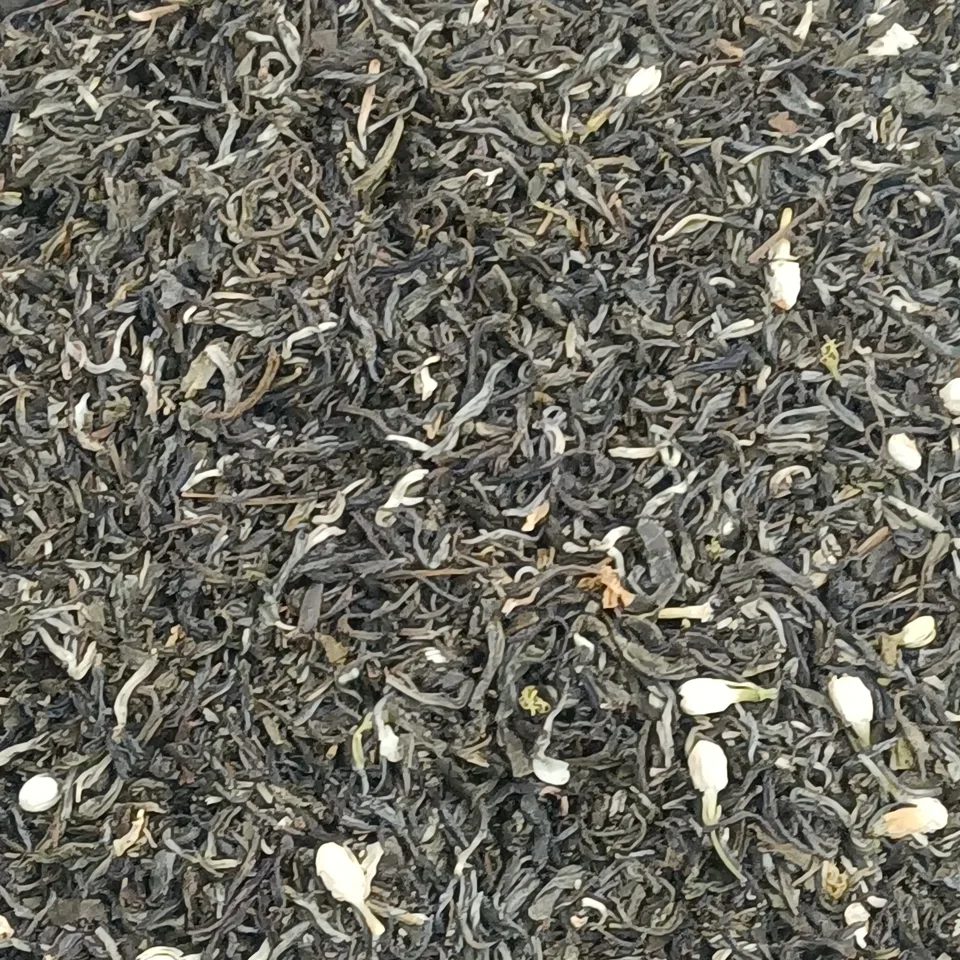
| Particle distribution | Named sieve method, screen sizes, percentages retained/passing, oversize and dust limits | Controls wetting, extraction rate, fines carry-over, filtration time and handling |
| Dry matter | Loss in mass or moisture method, as-received result, dry-matter result and calculation rule | Lets the buyer compare composition and cost on a consistent dry basis |
| Water extract | ISO 9768:1994 or another named method, edition and dry-basis reporting | Provides a standardised hot-water-soluble-matter comparison; it is not the buyer's plant yield |
| Total polyphenols | ISO 14502-1:2005, expression convention, units and dry-basis limit | Compares the Folin-Ciocalteu result under one method; it does not identify individual catechins |
| Catechins and caffeine | ISO 14502-2:2005 or validated agreed HPLC method; list each reported analyte and sum rule | Tests a compound-specific target and prevents “polyphenols” from being treated as “catechins” |
| Safety and cleanliness | Destination- and process-specific pesticides, contaminants, foreign matter and microbiology with methods and limits | Controls hazards before concentration can magnify a raw-material problem |
| Pilot performance | Defined process recipe, recovered solids, target-compound recovery, filtration time, clarity, colour and off-odour | Shows whether a representative lot works in the buyer's real process window |
| Pack and lot | Food-contact liner, net weight, moisture protection, lot code, traceability and storage conditions | Protects the approved input between release and extraction |
Do not confuse four different numbers
Water extract is a method result
ISO 9768 determines water extract through a specified boiling-water procedure and calculation from insoluble residue. It is useful only when both parties use the same method and basis. Your plant may use another temperature, time, pH, water-to-tea ratio, extraction count or solvent, so its recovered solids can differ materially from the ISO result.
Total polyphenols are not total catechins
ISO 14502-1 uses a colorimetric Folin-Ciocalteu assay for total polyphenols in leaf and instant tea. ISO 14502-2 uses HPLC and obtains total catechins by summing individual catechins; it can also determine caffeine. These results answer different questions. A purchase line reading only “polyphenols: minimum X%” is incomplete unless it names the method, units, expression convention and moisture basis.
Raw-leaf content is not recovered yield
A leaf may contain a target compound that the selected process does not fully recover. In a peer-reviewed hot-water study, temperature, time, particle size, pH, water ratio and repeat extraction all affected catechin yield or water efficiency. The reported optimum belonged to that material and experimental system; it is evidence to control the variables, not a universal recipe for every factory.
Finished-extract assay is not raw-tea assay
Concentration, fractionation, decaffeination, carriers and drying can change the relationship between the incoming tea and the final powder. Keep separate specifications and COAs for raw tea, in-process concentrate and finished extract, with an explicit mass balance between them.
Use an eight-step approval method
- Freeze the process and output target. Record the solvent system, normal and worst-case temperature, time, pH, liquid-to-solid ratio, extraction cycles, separation method, concentration and drying. Identify the finished product's target analytes and legal market before asking suppliers for numbers.
- Define the purchasing lot and sample. State what constitutes one lot and take a representative bulk-tea sample. Split and seal portions for chemistry, microbiology, pilot work and retention. A handful from one open sack cannot support a container decision.
- Control identity and permitted inputs. Name the botanical material, green-tea form, permitted blending and prohibited additions. ISO 11287:2011 is a voluntary reference for green tea sold as a beverage and is not a specification for finished extract or a guarantee of extraction suitability. Link identity evidence to the site's green tea verification plan.
- Make every laboratory line complete. For each test, write the analyte, method and edition, laboratory scope, sample preparation, unit, as-received or dry basis, rounding rule, uncertainty treatment and pass/hold/fail limit. ISO 1572 prepares a ground sample of known dry-matter content, while ISO 1573 measures loss in mass at 103 °C; naming the basis prevents wetter tea from appearing cheaper or analytically lower merely because it contains more water. Use an appropriately scoped tea testing laboratory.
- Specify particle form with a sieve result. Words such as broken, flakes and powder are too subjective. Use a named sieve stack and report the full retained/passing distribution. Pilot oversize and dust separately if either can block feeding, accelerate extraction, carry through filtration or alter bulk density. Do not demand fine material solely for faster extraction without checking separation cost.
- Run a controlled bench pilot. Use the buyer's intended recipe or a justified scale-down: measured dry tea, solvent composition, ratio, pH, temperature profile, time, agitation, cycles and filtration media. Record recovered dry solids, individual target compounds, caffeine where relevant, colour, aroma, turbidity, filtration time and residue mass. Compare at least the proposed material and the approved reference under the same run conditions.
- Calculate a dry-basis mass balance. Convert the purchased quantity to dry tea, then show raw target-compound mass, extract solids recovered, target mass recovered and losses. Calculate cost per kilogram of acceptable recovered solids or target compound—not only cost per tonne of incoming tea. Investigate totals that do not reconcile within a pre-agreed, process-validated tolerance.
- Approve the first commercial lot and lock change control. Release only when the lot COA, retained sample, particle profile and pilot result agree with the specification. Require prior notice for changes in leaf source, season blend, grade/form, particle preparation, process site, storage, packaging or test method. Connect the decision to supplier reapproval and lot traceability.
Common buyer mistakes
- Buying on the lowest raw-tea price without calculating recovered-solids cost.
- Using “water extract” and actual plant extraction yield as if they were the same measurement.
- Calling a Folin-Ciocalteu total-polyphenol result a catechin result.
- Comparing as-received and dry-basis percentages without conversion.
- Specifying “powder” or “fannings” without a sieve method and dust limit.
- Testing chemistry on one sample and pilot performance on an unrelated sample.
- Copying an academic extraction optimum directly into a production contract.
- Ignoring residue, contaminant or microbiology concentration through processing.
- Accepting a COA without checking its evidence limits.
- Allowing raw-tea source or particle-preparation changes without reapproval.
Practical conclusion
The usable sequence is finished target - process window - representative sample - method-defined raw tests - particle control - pilot extraction - dry-basis mass balance - first-lot release. Add this module to the broader bulk green tea purchase specification and the site's extraction raw-material product brief. To compare a proposed input, send the intended process, target compounds, annual volume, particle form, testing list and destination. Final process validation and legal approval remain with the buyer and its qualified laboratory and regulatory advisers.
Sources checked 5 September 2026: ISO 9768:1994, Tea — Determination of water extract, still published and current while under systematic review; ISO 14502-1:2005, total polyphenols by the Folin-Ciocalteu method and ISO 14502-2:2005, catechins by HPLC, both reconfirmed in 2025; ISO 1572:1980, preparation of a ground sample of known dry-matter content and ISO 1573:1980, loss in mass at 103 °C, both reconfirmed in 2025; ISO 11287:2011, green tea definition and basic requirements, confirmed in 2021; and Vuong et al., “Optimizing conditions for the extraction of catechins from green tea using hot water”, Journal of Separation Science, 2011. ISO methods are voluntary references unless law or contract adopts them; check the current edition, destination rules and your validated process before purchase.