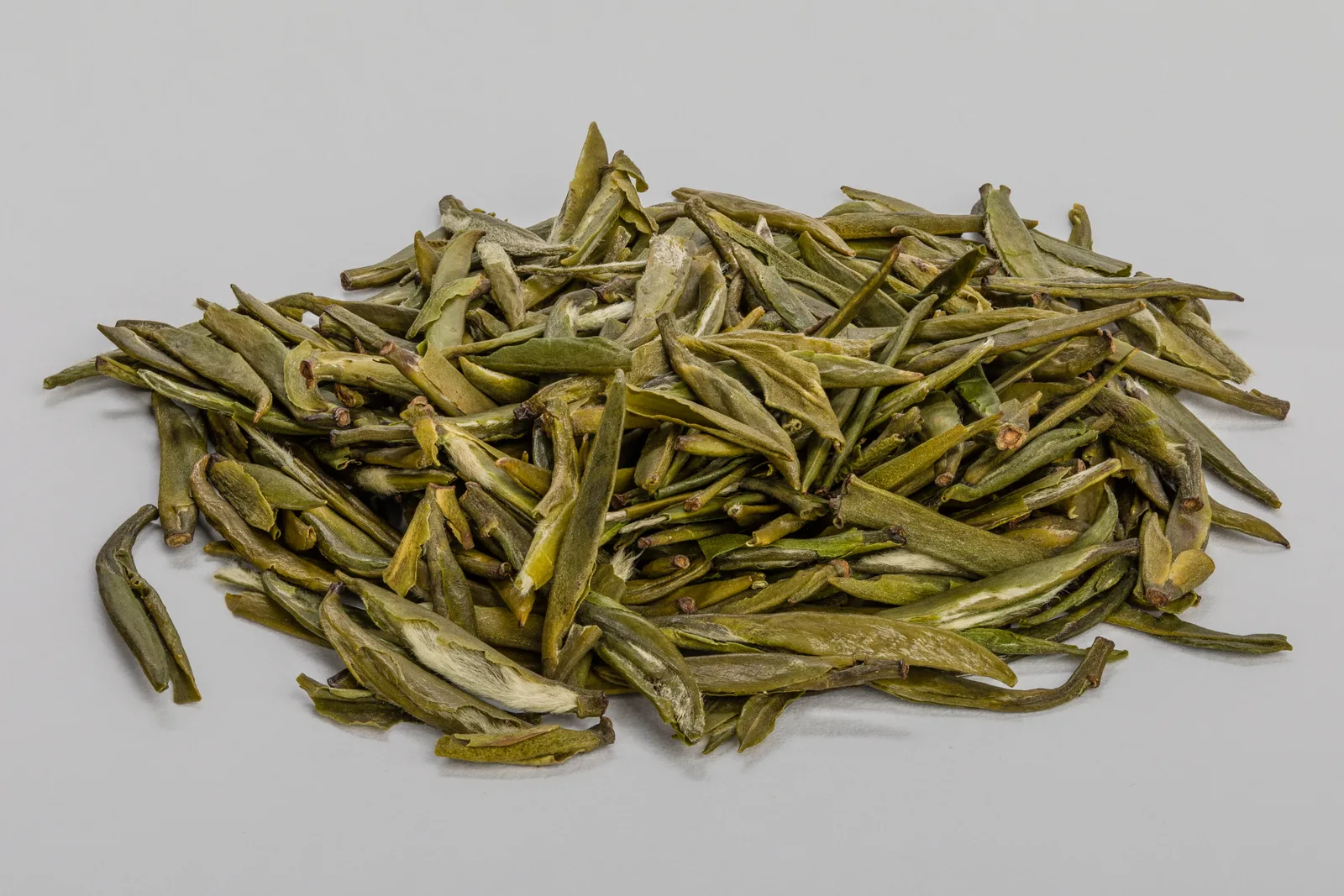
A retained tea sample can support a quality dispute only when the contract identifies the lot it represents and controls how equivalent splits are made, sealed, held, opened and tested. A jar labelled "reference" is not self-proving evidence. Before shipment, define its purpose, origin, split identities, seals, custody, storage, retention period, referee laboratory, methods and decision rule.
Retain evidence, not just tea
The useful object is an evidence package: the sample plus the record that connects it to a defined commercial lot. ISO 1839:1980, Tea - Sampling, confirmed current in 2024, applies to tea containers of all sizes and covers sampling, sample packing, labelling, dispatch and the sampling report. It gives a recognised technical route for drawing and documenting tea samples, but it does not write the parties' claim procedure or select a universal retention period.
An intact portion from a convenient top bag may still be unrepresentative. Separately drawn portions may carry matching labels but contain different material, and poor storage can change a sample. Retention protects a decision only after representative lot sampling creates a defensible common sample.
Keep the five requirement layers separate
- Legal requirement: applicable food, evidence and official-control rules may prescribe sampling rights, laboratories or records. A private sample is not automatically official.
- Voluntary standard: ISO 1839 addresses tea sampling; ISO/IEC 17025 laboratory competence; ISO 22095 chain of custody. They bind a purchase only when adopted or required.
- Trade reference: "seller," "buyer," "counter," "approved" and "referee" sample are useful labels but need definitions.
- Buyer specification: purchasing and quality teams set the lot link, mass, container, storage, tests, rule and evidence.
- Contract requirement: the agreement allocates custody, opening authority, laboratory, cost, deadlines and remedy.
Use a three-split architecture when the risk justifies it
A practical design is three equivalent sealed portions from one properly mixed aggregate sample: buyer, seller and unopened referee splits. Three is not a universal legal number; quantity and mass depend on the tests, repeat needs, heterogeneity, destructive preparation and law.
Codex CXG 33-1999, a voluntary residue-sampling reference, illustrates the logic. Each replicate laboratory sample travels with a signed record in a clean inert container, sealed and labelled, and receives a unique laboratory identifier. Storage must not affect the residues, and extra portions may be needed for confirmation. It is not a universal sensory rule; it shows why purpose, container, record, quantity and storage must be prewritten.
Write a retained-sample control sheet
Storage must match the purpose. The European Commission's SANTE/11312/2021 v2026 requires official pesticide samples to be traceable and stored to minimise decay, with specific advice for dried products beyond two weeks. This is not a blanket instruction to freeze commercial tea; conditions suitable for residues may alter sensory or physical comparisons. Create separately designated portions when purposes conflict.
An eight-step buyer governance method
- Define the claim question. State whether the sample will control sensory match, composition, residues, moisture or another item. List the exact method, unit, basis, limit and decision rule before sampling.
- Freeze the lot. Record the complete lot population and prevent uncontrolled mixing, packing changes or dispatch while the common sample is drawn.
- Draw one representative common sample. Use the agreed package-selection, increment, mixing and reduction method. Record every departure. A split cannot repair biased sampling.
- Calculate enough material. Ask the intended laboratories for minimum intake and destructive preparation needs. Include buyer, seller, referee, confirmation and reserve portions without weakening representativeness.
- Create equivalent splits in one controlled session. Use suitable containers, unique identifiers and tamper-evident seals. Photograph labels and seals, and have witnesses sign the same record.
- Separate custody. Give the buyer and seller their portions; place the referee portion with the agreed independent custodian or under dual-access control. Record every transfer and receipt.
- Monitor storage and expiry. Set conditions for each purpose, an inspection frequency, a claim-linked retention end date and a legal-hold override. Do not silently dispose of samples while an issue is open.
- Prewrite the dispute route. Require written notice, preservation of the affected goods, seal verification, joint laboratory instruction, defined handling of uncertainty, cost allocation, report distribution and the contractual remedy.
Do not confuse a commercial referee sample with an official right
For EU official controls, Article 35 of Regulation (EU) 2017/625 gives operators a second-expert-opinion right at their expense and, when relevant and feasible, enough material when requested. It does not delay urgent authority action. A private sample does not gain this legal status or override an authority decision.
For a private dispute, preselect the referee laboratory. Verify its exact scope under ISO/IEC 17025:2017, method, matrix, reporting limit, uncertainty and rule. ISO confirmed this edition in 2023. Competence cannot rescue an unrepresentative or degraded sample.
What retained samples can and cannot prove
ISO 22095:2020, now under review and carrying Amendment 1:2026, reinforces a useful boundary: chain of custody can support transparency and claim reliability, but is not intended by itself to make or verify a product claim. The sample's custody, the test result and the contract requirement must remain connected but analytically separate.
Common buyer mistakes
- Sealing three independently collected samples instead of three equivalent splits from one representative common sample.
- Writing only the grade and date while omitting supplier lot, package population and sample purpose.
- Using an ordinary paper envelope or permeable bag for long-term moisture, odour or volatile-residue questions.
- Assuming an intact seal proves representativeness, unchanged condition or laboratory competence.
- Keeping every portion with one party and calling the arrangement independent.
- Choosing the referee laboratory only after the parties disagree.
- Opening the only referee sample for an informal check without joint notice or a reserve.
- Applying a sensory sample's storage conditions to pesticide, moisture or microbiological testing without review.
- Setting a retention period shorter than the relevant claim window, shelf-life evidence need or legal hold.
- Treating a private retest as a substitute for an authority's official-control procedure.
Practical conclusion
The defensible sequence is define the decision - freeze the lot - sample representatively - make sufficient equivalent splits - seal and identify - separate custody - preserve for purpose - preselect the referee route - apply the agreed decision rule. This prevents a quality conversation from collapsing into an argument over which jar, lot, method or storage history should count.
Attach the plan to the bulk tea purchase specification, read what a certificate of analysis can and cannot prove, use the laboratory selection checklist, and align the process with Yunjing Tea's sample, inspection and claims policy. For a proposed order, send the product, lot-control needs, destination and intended tests before the sampling instruction is finalised.
Sources checked 27 August 2026: ISO 1839:1980, Tea - Sampling, confirmed current in 2024; Codex CXG 33-1999, Recommended Methods of Sampling for the Determination of Pesticide Residues for Compliance with MRLs; ISO/IEC 17025:2017, confirmed current in 2023; ISO 22095:2020 with Amendment 1:2026, under systematic review; European Commission SANTE/11312/2021 v2026; and EU Regulation (EU) 2017/625, Article 35.