Do not approve a Chinese tea supplier from a certificate PDF alone. Record the certified legal entity, site, activity scope, standard and edition, certificate number, issuing body, status and dates; then verify those fields in the issuer's own public channel and, where applicable, China's official certification-information system. A valid certificate may still cover a different company, site or activity, and it is not tea-lot evidence.
Define the certificate claim before checking it
This method is for management-system certificates commonly presented during Chinese tea supplier approval, such as quality- or food-safety-management system certification. It does not verify organic, product, laboratory, food-licence or export records; those use different evidence routes.
Freeze the approval unit first: contracting legal entity + manufacturing or packing site + tea or product family + activity + destination use. Then write the claim in one sentence, for example: “Factory X at Address Y has a currently valid food-safety management-system certificate covering the manufacture and packing of tea.” The verification should prove or disprove that exact sentence.
Build an eight-field certificate verification record
| Field | What to capture | Why it matters |
|---|---|---|
| Certified organization | Chinese and English legal name, unified social credit code where available | Prevents a trader, affiliate or similarly named company being substituted for the manufacturer |
| Certified site | Full address and any additional sites or exclusions | Confirms whether the actual tea-processing or packing location is covered |
| Scope | Exact activities, products and boundaries stated on the certificate | Shows whether tea manufacture, packing, storage or only office functions are included |
| Standard and scheme | Full standard reference, edition, scheme name and certification rule | Separates certifiable requirements from guidance and identifies the correct lookup route |
| Certificate identity | Certificate number, issue date, expiry or validity period and revision | Allows exact matching without relying on logos or layout |
| Certification body | Legal name, approval or accreditation details and public query address | Shows who made the third-party attestation and whether it acted within scope |
| Live status | Valid, suspended, withdrawn, cancelled, expired or not found, with check timestamp | A polished PDF does not reveal a later status change |
| Buyer decision | Accept for stated use, clarify, independently confirm or stop | Prevents “document collected” being mistaken for “supplier approved” |
Use an eight-step validity check
1. Preserve the supplied file and its context
Save the original file, supplier email, received date and file hash or controlled document ID. Do not begin from a screenshot with cropped edges. Record what the salesperson says the certificate proves.
2. Match the legal entity independently
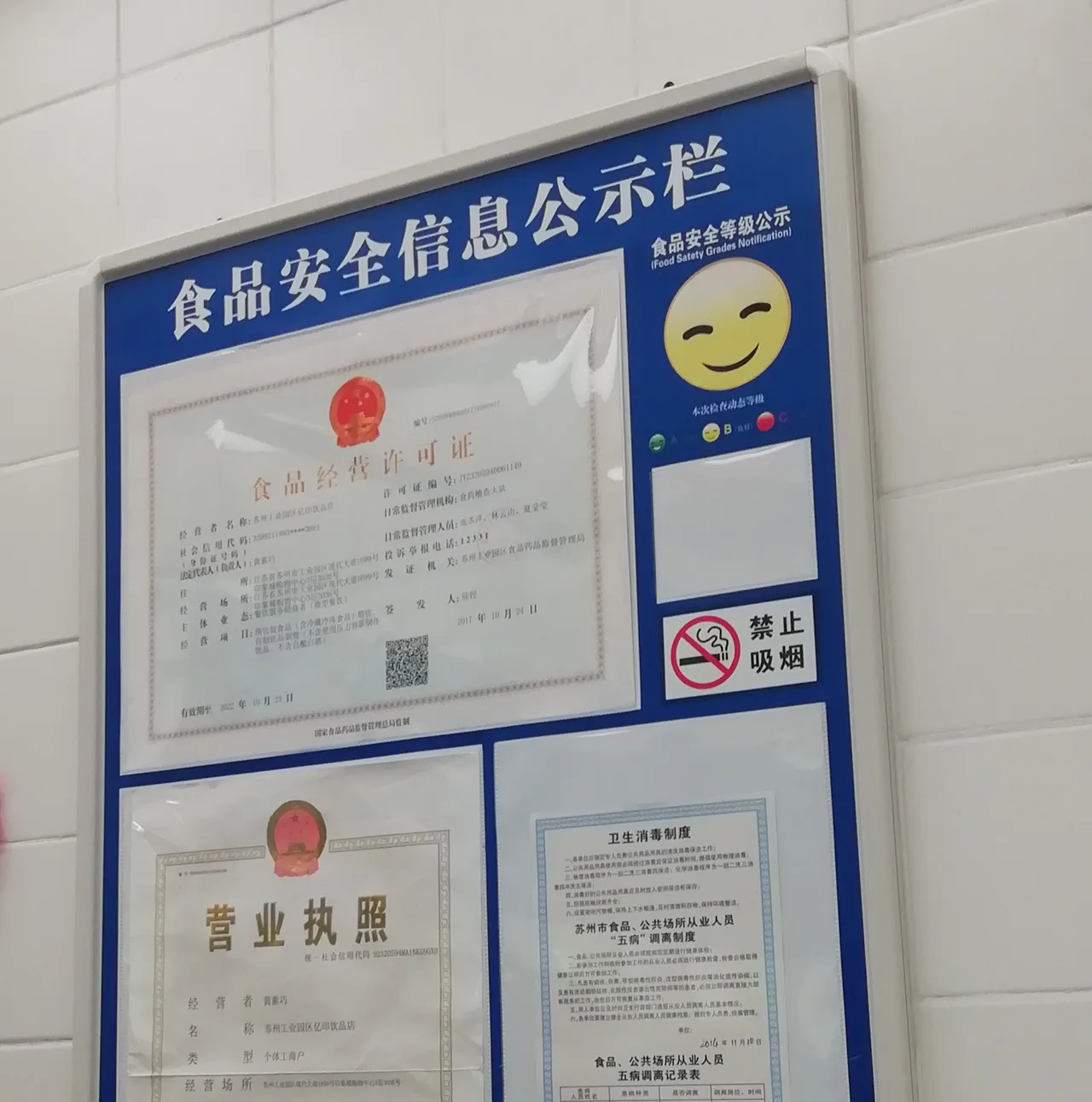
Compare the certified name with the Chinese business licence and the contracting party. Use the National Enterprise Credit Information Publicity System to check official identity and registration status, allowing for Chinese-name-first records and documented name changes. The site's Chinese tea factory verification guide explains why a trading company and a manufacturing site must not be silently treated as the same approval unit.
3. Match the physical site and activity scope
Read every page and annex. An entity-level name match is insufficient if the manufacturing address is absent, an additional site was removed, or the scope says only “sales” while the buyer expects tea processing and packing. Compare the certificate with the supplier's controlled document pack, audit evidence and current process map.
4. Identify exactly what was certified
Record the full standard and edition rather than writing “ISO certified.” ISO develops standards but does not certify organizations or issue their certificates; external certification bodies do. Also separate management-system certification from product certification. ISO's expected-outcomes guidance says ISO 22000 certification concerns a food-safety management system; it does not mean the products themselves are certified or that a particular lot is compliant.
5. Verify the issuing body and its route
Find the certification body independently, not through a supplier-shortened link. Confirm its legal name, public certificate-search route, relevant certification field and any accreditation claim. China's January 2026 CNCA notice requires management-system certification bodies to operate within their approved field and publish a way to query certificate validity.
6. Query live status in the right system
Search by certificate number and organization name in the certification body's own public service. Cross-check the CNCA National Certification and Accreditation Information Public Service Platform where applicable. Capture the result, URL, date, time and search fields. “Not found” is not automatic proof of fraud: spelling, recent issuance, a self-developed certification rule or a foreign route may explain it—but approval should pause until the issuer confirms the record through a verified channel.
Rule-date note checked 23 September 2026: SAMR/CNCA Announcement No. 28 of 2026 was published on 14 September and takes effect on 30 September 2026. From that date, certification bodies covered by the announcement must provide a free, real-time and convenient validity-query route of their own. Certificates issued under CNCA-developed rules may also have basic information queried on the CNCA website; certificates under a body's self-developed rules are queried through that body. The announcement also requires certificate-status changes to be reported when the decision is made. Until the effective date, treat these as upcoming controls, not requirements already in force.
7. Reconcile every mismatch before approval
Compare names, addresses, scope wording, standard, certificate number, issue/expiry dates and live status character by character. Ask the certification body through independently obtained contact details when a mismatch matters.
8. Convert the check into an ongoing control
Set a maximum evidence age and event triggers: certificate suspension, expiry, site move, legal-name change, certification-body change, scope revision, serious incident or relevant regulatory action. Link the record to the supplier verification schedule and the supplier change-control method. A valid result today is not a permanent status.
Use a decision matrix, not a yes/no checkbox
| Finding | Buyer action |
|---|---|
| Entity, site, scope, standard, issuer and live status all match | Accept the certificate only for its stated management-system evidence; continue product, lot and destination checks |
| Certificate is valid but covers another site or only sales/office activity | Do not use it as manufacturing-site evidence; request the correct scope or alternative verification |
| Supplier PDF and public record differ | Pause approval, preserve both versions and obtain written issuer confirmation |
| Status is suspended, withdrawn, cancelled or expired | Stop reliance; assess affected approvals, open orders and prior decisions |
| Record is not found or the query route is unavailable | Classify as unresolved, not valid; verify through independently sourced issuer contacts |
| Certificate matches but lot evidence is missing | Keep the supplier-system result separate and apply the relevant COA, sampling and release controls |
Know which requirement controls
- Legal requirement: Chinese certification rules govern certification bodies, reporting and public-query routes; they do not by themselves require every tea buyer to demand a certificate.
- Voluntary standard: a management-system standard such as ISO 22000 is normally voluntary unless law, a scheme or a contract makes it applicable.
- Accreditation: independent confirmation of a certification body's competence for a defined field; it is not the supplier's certificate and not a tea-lot test.
- Trade reference: a certificate copy, QR code or database result helps due diligence but does not replace a buyer decision.
- Buyer specification: states the acceptable entity, site, scope, standard, status and evidence age.
- Contract requirement: can require continued validity and prompt notice of suspension, withdrawal, scope change or site change; it cannot turn a system certificate into proof of lot conformity.
Common buyer mistakes
- Accepting a certificate because the logo and seal look professional.
- Searching only the English company name.
- Matching the legal entity but not the factory address.
- Ignoring annexes, exclusions and activity-scope wording.
- Saying “ISO certified” without the standard, edition or issuing body.
- Treating a management-system certificate as product, pesticide or microbiological proof.
- Using a supplier-provided query link without independently finding the issuer.
- Treating “not found” as either automatically valid or automatically fraudulent.
- Saving the PDF but not the dated public-query result.
- Failing to recheck after expiry, suspension, site change or certification-body change.
Practical conclusion
A defensible certificate check follows claim - entity - site - scope - standard - issuer - live status - decision - recheck. The useful output is not a folder marked “certificates”; it is a dated record showing exactly what the certificate supports and what it does not. Review Yunjing Tea's sample-to-shipment quality-control context and send the supplier/site and evidence questions early, while the buyer and its advisers retain responsibility for approval, destination compliance and lot release.
Sources checked 23 September 2026: SAMR/CNCA Announcement No. 28 of 2026, published 14 September 2026 and effective 30 September 2026; CNCA's notice on management-system certification effectiveness, published 9 January 2026; CNCA's official business-system directory; SAMR's rules for the National Enterprise Credit Information Publicity System; ISO's official certification explainer; and ISO/CASCO's expected outcomes for ISO 22000 certification. Confirm the current issuer, scheme, database and destination requirements for the actual supplier before relying on any certificate.